Does Leklai Fade? Natural Transformation vs Dye Fading — Complete Iridescent Goethite Colour Guide
Share
Does Leklai Fade? Natural Transformation vs Dye Fading — Complete Iridescent Goethite Colour Guide
After keeping a piece of Leklai for some time, you notice something has changed.
Some collectors feel a quiet delight — the stone looks richer, deeper, more alive. Others feel a flicker of concern — is it fading? Has something gone wrong?
These two experiences point to completely different realities.
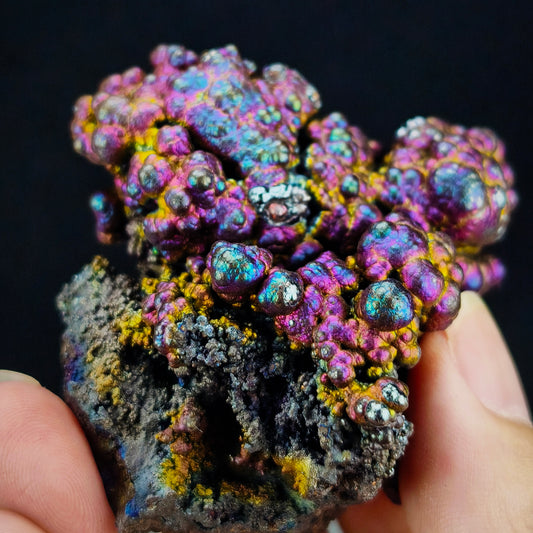
This guide explains the full picture of colour change in Natural Leklai Iridescent Goethite — what genuine transformation looks like, what dye fading signals, and how to read your stone's colour language with confidence.
Natural Leklai Is a Living Stone — Colour Change Is Part of Its Nature
A foundational understanding first.
Natural Leklai Iridescent Goethite is a living stone — not a static mineral, but a natural presence that continues to interact with its environment and keeper, evolving over time.
Colour change is the expression of that living quality. It is not a problem signal.
Based on long-term collector observation and documented Leklai stories, genuine pure natural Leklai can develop in colour over time — deepening in existing tones, developing new layers of colour, or gaining richer lustre from what was already present.
These are all transformation. They are the natural energy language of a living stone.
What Natural Transformation Looks Like
Based on real collector experiences and sustained observation, genuine Leklai transformation shares several characteristic features:
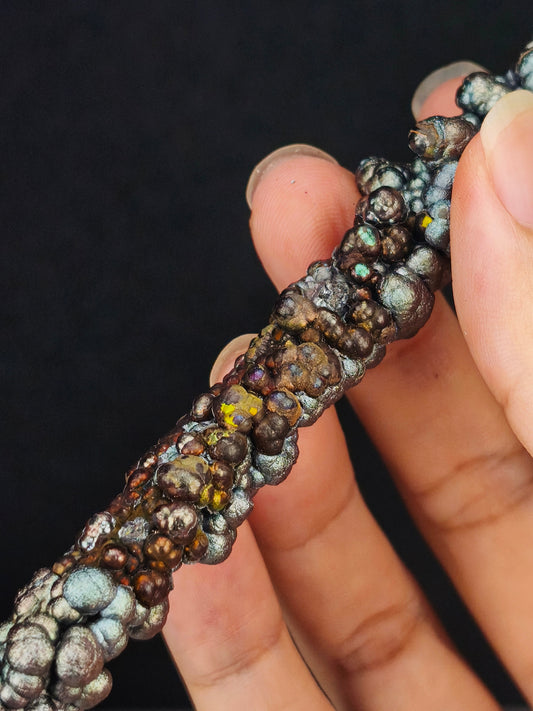
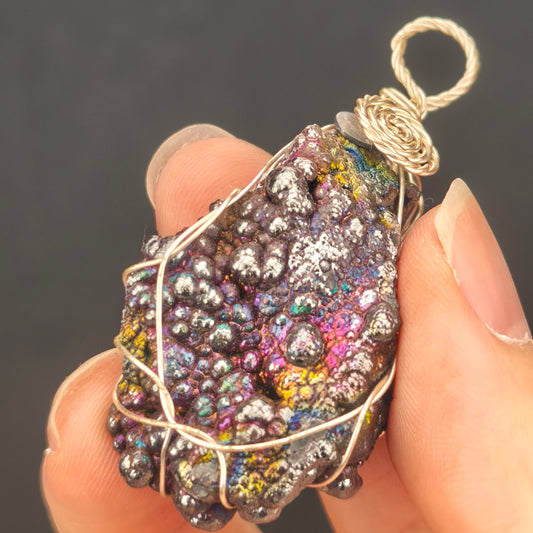
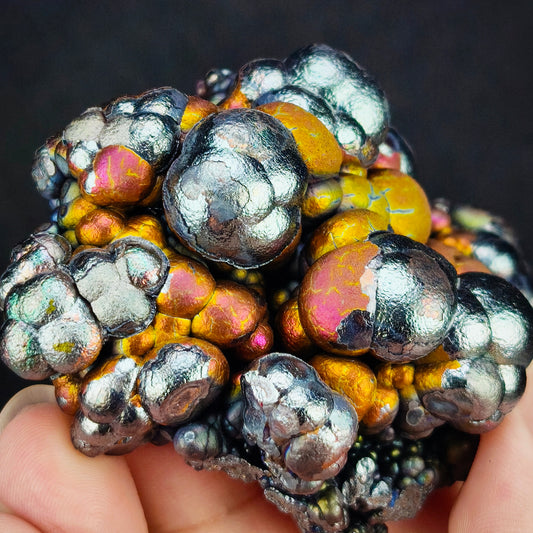
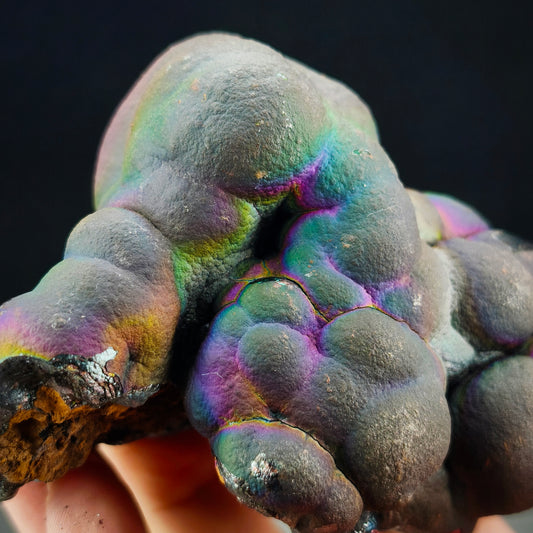
Colour deepens or develops new layers — it does not uniformly fade Transforming Leklai moves toward greater richness — existing colour deepens, or new colour layers emerge from within. This is the expression of increasing energy density, not diminishment.
Change is gradual and directional Transformation is a slow, sustained process — not sudden. It has a natural direction: from brown toward silver, from silver toward emerging colour, from single colour toward multiple layers. This is the documented growth path of Leklai's energy.
Different areas change at their own pace Transforming Leklai does not change uniformly. Some areas develop colour before others. Some hold their existing state while another part begins to shift. This natural unevenness is itself a characteristic of genuine transformation.
Linked to care and interaction with the keeper Based on collector sharing, Leklai kept with genuine love and daily attention — touched, spoken to, held with gratitude — tends to show richer and faster transformation. This is widely observed among long-term Leklai collection communities.
Signs of Dyed Colour Fading
In contrast, colour changes in dyed Leklai carry entirely different characteristics:
Colour fades evenly and uniformly Artificial dye is a surface-applied pigment that gradually detaches over time through contact and wear. The result is uniform, overall fading — not deepening in certain areas while others remain stable.
Fading is irreversible Once dye fades, the colour does not return, and no new layers or depth emerge. This is the complete opposite of authentic natural metamorphosis.
Fading accelerates under certain conditions Dyed Leklai exposed to water, light, or perspiration will fade more rapidly. If you notice significant colour change after contact with water, or pigment transfer onto skin, these are clear indicators of dyed material.
The colour beneath fading dye looks noticeably different When dyed Leklai fades, it reveals the original base colour that was covered — often dramatically different from the surface colour, with none of the gradual, layered depth of genuine natural transformation.
⚠️ On "Seasonal Colour Change" and "Temperature-Sensitive Colour Change" — Recognise This for What It Is Some sellers claim their Leklai "changes colour with the seasons" or "responds to body temperature" — presenting this as evidence of the stone's spiritual power and energy. Be aware: this type of colour change is a chemical reaction in dyed material. Heat and humidity accelerate dye breakdown, causing the colour to shift — with no connection to spiritual energy whatsoever. True natural Leklai transformation is a soul-level energetic process — deep, directional, and unpredictable. It cannot be triggered by warmth or replicated by temperature. If a piece of Leklai changes colour predictably with heat, that change is coming from the dye — not from the stone.
A Simple Self-Assessment
If you have questions about colour change in your Leklai, these four observations provide a useful initial guide:
- Direction of change — Is the colour becoming richer and deeper, or uniformly lighter?
- Speed of change — Is it gradual over months, or noticeably sudden (especially after water contact)?
- Water contact test — Does colour change or transfer noticeably after water contact?
- Source — Does this piece come from a seller with an explicit zero-dyeing, zero-processing commitment?
These four points provide a practical starting framework for distinguishing natural transformation from dye fading.
An Important Note on Sun Exposure
⚠️ Top-grade and collector-grade Leklai Iridescent Goethite is not recommended for extended direct sun exposure.
Prolonged UV exposure can cause natural mineral colour in the most vibrant areas to become dull — this is not dye fading, but a natural mineral response to excess UV. Moonlight — especially at new moon and full moon — is the ideal energetic cleansing and recharging method for fine Leklai.
Conclusion
Colour change in Natural Leklai Iridescent Goethite falls into two entirely different categories:
Natural transformation — colour deepening, new layers emerging, growing richer — is the living stone's energy language. It is entirely positive.
Dye fading — uniform lightening, water acceleration, irreversibility — is the exposure of artificial surface treatment. It is a signal of processed material.
Pure natural Leklai — zero dyeing, zero processing, zero additives — does not fade. It only transforms. Only grows. Only becomes more itself, in dialogue with you.
FAQ
Q1: How long does Leklai transformation typically take? A: Every piece transforms at its own pace, in relationship with its natural character and the keeper's care. Based on collector sharing, some pieces show visible colour development within months; others are gradual over years. Care with genuine love and attention supports natural transformation.
Q2: Is it normal for Leklai colour to look different after water contact? A: Pure Natural Leklai may appear temporarily deeper in colour when wet — moisture enhances the visual depth of natural mineral surfaces — and return to normal when dry. This is normal. If colour uniformly retreats after water contact, or if colour transfers to skin, these indicate artificial dyeing rather than natural colour.
Q3: How should I care for my Leklai to support transformation? A: Based on collector experience, the most important factor is genuine care — daily touch, gratitude, quiet conversation with the stone. Moonlight bathing, especially at new and full moon, is ideal for cleansing and recharging. Natural water exposure is beneficial for energy renewal. Avoid extended direct sun for top-grade and collector-grade pieces.
Q4: Can a piece of Leklai both transform and fade at the same time? A: Pure natural Leklai only transforms — its naturally formed colour does not fade. If a piece labelled as natural Leklai shows clear fading behaviour, this is a strong indicator that the piece is dyed or processed rather than genuinely pure natural.
✦ Pure Natural Leklai Only Transforms — Never Fades
✦ Ready to Find Your Natural Leklai Iridescent Goethite?
HARUKA is a Hong Kong-based specialty store dedicated to the study and collection of natural Leklai (Leklai Goethite), with over seven years of hands-on experience.
We believe that every piece of Leklai has its own unique character and connection. That is why we offer private appointment visits, allowing you to explore, experience, and choose at your own pace in a comfortable and pressure-free environment.
Whether you are discovering Leklai for the first time or have been a collector for years, we are always happy to share our knowledge, research, and real-world experience.
If you are unable to visit in person, our online store is available worldwide, with international shipping options.
📍 Visit by Appointment / Online Shopping: Contact Us
📧 Email: Haruka@thegoethite.com
📱 WhatsApp: +852 7075 2668
📱 LINE: +852 7075 2668
📱 Facebook / Instagram: @leklai.haruka
The most valuable piece of Leklai is not always the rarest or most expensive one — it is the one that resonates with you.
May you discover the piece that is meant for you.
👉 Explore Our Natural Leklai Collection
Further Reading
👉 What Is Natural Leklai? A Complete Beginner’s Guide
👉 Complete Guide to Leklai Colors | What Energy Does Each Color Represent?
👉What Is Collector-Grade Leklai? Why Every Piece Sold Is One Fewer in the World | Iridescent Goethite
👉What Does It Mean When Your Leklai Breaks?
👉What Is Collector-Grade Leklai? Why Every Piece Sold Is One Fewer in the World | Iridescent Goethite
👉How to Tell Real Leklai From Fake — 5 Methods to Identify Natural Iridescent Goethite
👉 7 Years of Real Case Studies Collection
These articles will help you gain a deeper understanding of Leklai — worth reading before making your decision.
About HARUKA Leklai
HARUKA Leklai is dedicated to sharing knowledge, research, collecting experiences, cultural history, and real stories related to natural Leklai (Leklai Goethite).
The content on this website is compiled from years of collecting experience, publicly available references, cultural records, and real-life accounts. We continue to update our findings and observations as our research grows.
Our goal is to build one of the most comprehensive Chinese-language resources on Leklai, helping more people understand its history, cultural significance, collecting traditions, and related stories.
Whether you are new to Leklai or a long-time collector, we invite you to explore our growing collection of articles, guides, and educational resources.