How to Identify Genuine Leklai — Complete FAQ on Natural, Dyed, Polished and Cast Fakes
Share
How to Identify Genuine Leklai — Complete FAQ on Natural, Dyed, Polished and Cast Fakes
Authenticity is a genuine concern in the Leklai market.
For those encountering Leklai for the first time, or collectors considering their second or third piece, understanding how to distinguish genuine from artificial pieces is worth taking seriously.
This article addresses the most common questions about Leklai authenticity in a direct question-and-answer format, based on seven years of HARUKA's professional pure natural sourcing experience.
Basic Identification
Q1: How do I tell real Leklai from fake?
Direct answer: Judge across five dimensions — natural colour layering, presence of natural fractures, individual uniqueness of form, the seller's explicit zero-processing commitment, and long-term seller credibility with documented real cases.
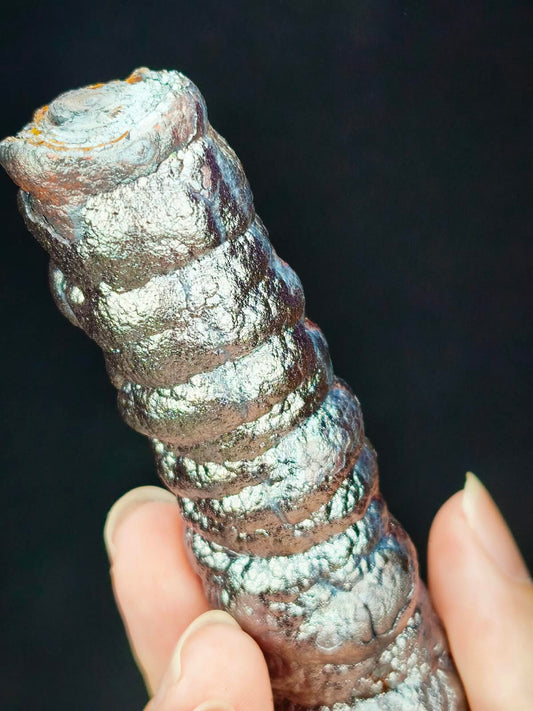
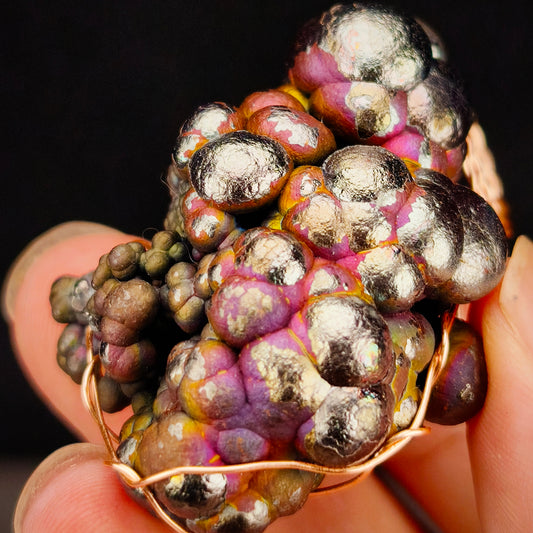
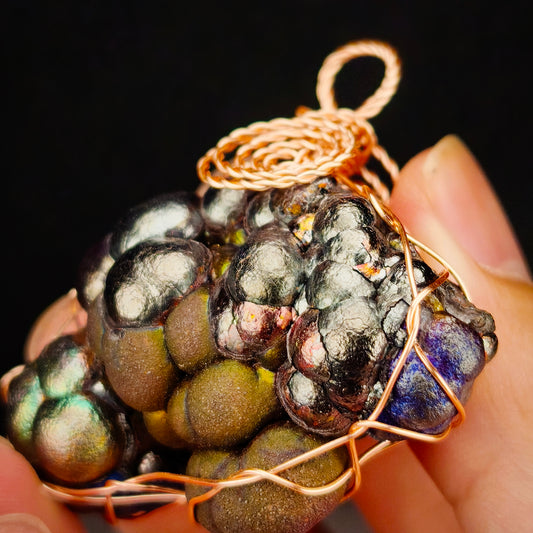
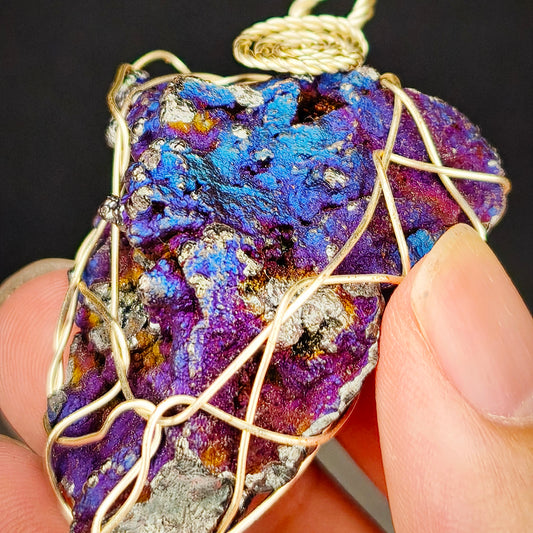
Natural Leklai's colour shows varied depth under different light angles rather than a uniform flat tone. Natural fractures form during the extraction process and are not flaws. Every genuine natural piece has unique shape and texture — no two are identical.
If a piece's colour is suspiciously uniform and vivid, the surface is flawlessly free of any natural marking, or it looks nearly identical to other "matching" pieces, these are signals warranting further verification.
Q2: What is the fundamental difference between pure natural and artificially processed Leklai?
Direct answer: Pure Natural Leklai is zero-polished, zero-dyed, zero-processed and zero-additive, with energy coming from millions of years of natural mineral formation. Processed Leklai has been dyed, polished or otherwise altered, changing the mineral's natural structure.
This difference is not only visual — it is fundamental to the energy itself. As a living stone, Leklai's energy mechanism is built on its natural qualities: active sensing, active clearing, continuous transformation. Once artificially processed, these natural qualities are affected, and whether the piece can still function the same way is a question worth taking seriously.
Pure natural also means no known chemical additive exposure risk from long-term wear — a fundamental safety distinction.
Q3: What is mould-cast Leklai? How do I identify it?
Direct answer: Mould-cast Leklai is produced by dissolving source material and recasting it in moulds. The clearest identification signals are: surfaces that are too perfect, no natural fractures, and multiple "identical" pieces that look nearly the same.
Natural Leklai is the result of millions of years of natural formation — every piece's shape, texture and colour layering is genuinely unique. Mould-cast pieces are the result of industrial production, and pieces made from the same mould show an unusually high degree of similarity to one another.
If you see multiple "Leklai" pieces from the same seller or batch that look almost identical, this is a warning signal worth paying close attention to.
Q4: Are natural fractures a flaw?
Direct answer: No. Natural fractures are proof of authenticity in pure natural Leklai — not a quality problem.
Leklai extraction from the mountain often involves manual digging and handling, and naturally formed fracture marks are a genuine record of this real extraction process. While completely intact pieces without any fractures are indeed rarer, pieces with natural fractures are equally authentic natural specimens, with no difference in energy.
If a piece claiming to be "pure natural" has a surface that is suspiciously perfect, with no natural marking whatsoever, this warrants further verification — such "too perfect" presentation is sometimes a sign of artificial processing.
Colour and Dyeing
Q5: Is overly vivid colour a sign of dyeing?
Direct answer: Not necessarily, but it requires careful observation. Genuine high-colour natural Leklai shows depth and layering; dyed pieces tend to show colour that is too uniform and too consistent.
Natural Leklai's colour forms through millions of years of mineralisation — even highly coloured gold or rainbow pieces show varied depth under different light angles, rather than a single flat vivid tone.
Dyed Leklai's colour tends to be "too perfect" — uniform, consistent, lacking natural layering. A simple test is to observe the piece from different angles and lighting: natural colour shifts with the angle, while dyed colour typically does not.
Q6: My Leklai faded after water contact. Does that mean it was dyed?
Direct answer: It depends on the manner of fading. Uniform, overall fading is generally a sign of dyeing. Localised red or brown seepage is a normal natural phenomenon from red clay content within the mineral.
Natural Leklai can sometimes show light red or brown seepage during a water bath — this is a genuine reaction from the natural red clay content within the mineral body, and is entirely normal, not dye washing off.
Dyed Leklai's fading is typically uniform and overall — after soaking, the original colour visibly lightens, sometimes even tinting the water itself with a matching colour. If this occurs, it warrants caution.
Q7: Why are there so many fake Leklai pieces on the market?
Direct answer: Three root causes — genuinely natural supply is extremely limited, most buyers lack identification knowledge, and there is no unified authentication standard in the market.
Naturally coloured Leklai represents approximately 1–2% of all extraction from any given mountain; collector-grade vivid colour is approximately 1–2% of that. This extremely limited genuine supply creates a clear gap against substantial market demand — and this gap is the root reason counterfeit pieces find opportunity.
Combined with the absence of a unified official authentication system for Leklai, identification relies primarily on buyer knowledge and seller credibility — leaving room for some sellers to pass off processed or mould-cast pieces as natural specimens.
Buying With Confidence
Q8: How do I ensure I'm buying genuine Leklai online?
Direct answer: Confirm whether the seller provides genuine unretouched photographs of the actual piece, whether they explicitly state a zero-processing commitment, and whether they have a verifiable long-term operating history with real documented cases.
Clear, unedited photographs of the actual piece are the first step — natural Leklai's texture and layering present naturally under real lighting, while overly polished images warrant scepticism. Whether a seller is willing to clearly state specific commitments like "zero polishing, zero dyeing, zero processing" is also an important credibility indicator.
In addition, long-established sellers typically have an accumulating body of real user cases and sharing — this kind of first-hand, traceable documentation is more valuable than any one-sided promotional claim.
Q9: Is there official certification for Leklai?
Direct answer: There is currently no unified official mineral certification system for Leklai. Identification relies primarily on a seller's professional knowledge, long-term credibility, and transparent sourcing disclosure.
This differs from minerals like diamonds or jade, which have mature certification systems. Precisely because of this lack of unified certification, choosing a seller with genuine extraction experience, a long operating history, and willingness to clearly explain their sourcing becomes especially important.
All HARUKA Leklai comes from first-hand pre-pandemic extraction by our dedicated team in Malaysia's White Clay and Red Clay Mountains. This sourcing history and operating background is the fundamental basis of our pure natural commitment.
Q10: How does HARUKA guarantee its Leklai is pure natural?
Direct answer: Through seven years of professional sourcing experience, an absolute commitment to zero polishing, zero dyeing, zero processing and zero additives, and the long-term accumulation of hundreds of documented real cases.
All HARUKA Leklai comes from first-hand field extraction by our dedicated pre-pandemic team in Malaysia's White Clay and Red Clay Mountains. Every piece, from extraction and cleaning to its final presentation, undergoes no polishing, dyeing or any form of processing — its natural fractures, natural colour and natural form are exactly as they were when it left the mountain.
Post-pandemic mining restrictions mean these pre-pandemic specimens are genuinely irreplaceable in today's market.
Quick FAQ
Q: Is every pure black Leklai genuine?
A: Not necessarily. Pure black is the most common natural Leklai colour, but artificially blackened or polished imitations also exist. The same identification approach applies — check for natural fractures, natural surface texture and layered lustre, rather than assuming authenticity simply because the colour is common.
Q: Is a significantly cheaper piece definitely fake?
A: Lower price does not necessarily mean fake, but a price far below the reasonable market range does warrant caution. Natural Leklai's price reflects genuine extraction difficulty and rarity. For unusually cheap "pure natural Leklai," further verification of the seller's sourcing claims and operating background is recommended.
Q: Can authenticity be judged by colour alone?
A: Not recommended. Authenticity assessment requires considering multiple dimensions together — colour layering, natural fractures, uniqueness of form, and seller credibility. Colour is one important reference point, but not the sole standard.
Q: I think I bought a fake piece. What should I do?
A: First, communicate directly with the seller to understand their sourcing claims and return policy. Choosing a seller with a clear return policy before purchasing is an important way to protect yourself. In the longer term, choosing a seller with established credibility and transparent sourcing history is the most fundamental way to avoid this issue altogether.
⚠️ All energy descriptions reflect documented observation and user sharing. They do not constitute medical advice and do not replace professional medical care.
✦ Choose Leklai You Can Trust
HARUKA — Hong Kong's pure natural Leklai Iridescent Goethite specialist. Seven years. Hundreds of real stories. Zero polishing. Zero dyeing. Zero processing. Zero additives.
📍 Book a visit or shop online: thegoethite.com
📱 Facebook / Instagram: leklai.haruka
👉 Explore all pure natural Leklai Iridescent Goethite collections