A True and Terrifying Story From the Leklai Collection Mountains — Buried by Landslide, and the Grateful Journey Home

Every Piece Has a Story You Don't Know
When you hold a piece of pure natural Leklai, you're holding something that didn't simply appear on a shelf.
It was somewhere in the deep mountain caves of Malaysia before it was in your hands. Someone's journey brought it from there to here. That journey was not a simple one.
Today, I want to share a story that I think every person who owns or is considering owning Leklai should know — not to cause alarm, but because understanding where Leklai comes from deepens the appreciation for what you hold.

After the Storm: When the Mountain Becomes Most Dangerous
Experienced Leklai collectors understand something that outsiders rarely consider: the collection season is not simply a matter of choosing when to go up the mountain.
Weather is a constant variable — and not just in the obvious sense of whether conditions are pleasant.
After significant rainfall, and particularly after thunderstorms, the mountain becomes temporarily but genuinely dangerous.
The mechanisms are straightforward: water penetrating the mountain loosens the bond between soil layers. Rock faces that were stable become unpredictable. Paths that were firm become treacherous. Cliff edges that collectors depend on become genuinely hazardous. Inside caves, water levels can rise, blocking entry and exit routes.
The protocol among experienced collectors is clear: after significant rain or thunderstorm, you wait. You do not go up immediately. You give the mountain time to settle, to drain, to stabilise — before resuming collection.
But mountains are not predictable on human schedules. And sometimes collectors are already in position when conditions change.

The Day Everything Changed
On this particular occasion, a team of collectors was distributed across different positions on the mountain — as is typical, with individuals working their specific areas in coordination but not in immediate proximity to each other.
The storm had passed. But the mountain had not yet settled. The soil was still saturated. The positions — particularly the higher cliff-face positions where the rarest varieties grow — were still unstable in ways that weren't immediately visible.
The collector at the highest position had been working his area when the ground gave way.
A landslide.
It came without warning, as they typically do. There was no time to retreat to a safer position. The moving earth caught him, carrying him down and covering him.
He was buried under the landslide.
The Silence That Saved His Life
On another part of the mountain, working their own area, his colleagues continued at their tasks in the way that experienced collectors do — focused, systematic, aware of the sounds of the mountain around them.
After some time — it's difficult to say exactly how long, but long enough that it felt wrong — one of his colleagues noticed something.
Silence from his direction.
In mountain collection work, the constant low presence of sound from your colleagues — movement, tool use, occasional calls, the ambient noise of another person working — becomes part of the background of a working day. You don't consciously attend to it. But some part of your awareness registers it.
When that background disappeared, something registered.
His colleague stopped what he was doing and listened actively. Nothing.
He called out. No response.
He moved toward where the sound should have been coming from. He found the landslide site.
They began searching.

The Finding
Searching for a person buried under a landslide is an experience with no guaranteed outcome. Earth can shift further. The buried person's location is uncertain. Time is critical.
The team gathered and searched systematically and urgently.
They found him.
He was buried — covered in earth, physically constrained, unable to self-rescue. But he was alive.
Working together, they cleared the earth around him. They helped him out.
He was shaken. He had cuts and bruises from the force of the fall and the weight of the earth. But nothing was broken. Nothing was life-threatening.
After care and support from his colleagues, he was able to come down from the mountain.
He came home safely.

The Gratitude That Followed
In the aftermath, the entire team — those who had found him and those who learned what had happened — experienced a profound wave of gratitude.
Gratitude that his colleagues had noticed the silence when they did. Gratitude that the search had found him before the situation became worse. Gratitude that the earth, despite covering him, had not crushed him. Gratitude for every safe step down the mountain afterward.
This particular collector had always had a deep love for Leklai — a reverence for what it represents and a genuine personal connection to the work of collecting it. Those around him observed, and he himself reflected, that perhaps that connection had offered him some form of protection in those critical moments.
Whether you interpret that through the lens of spiritual protection, coincidence, or something else entirely — what is not in question is that he survived an incident that could very easily have had a different ending.
What Changed After That Day
Beyond the personal gratitude and relief, something practical and lasting shifted in the team's approach to their work.
Safety practices were reviewed and significantly strengthened.
Post-storm waiting periods became more rigorously observed, not as bureaucratic protocol but as genuine priority. Communication systems between team members working in different positions were improved to ensure the silence that saved him would be noticed by someone in any future scenario. Understanding of landslide warning signs was developed and shared. Personal equipment and emergency response knowledge were updated.
The near-tragedy became, in a very real sense, the foundation for a meaningfully safer working culture.
This is often how genuine danger transforms practice — not through comfortable theoretical planning, but through the visceral, undeniable reality of what could have happened.
What This Story Means for Every Piece of Leklai
I share this story not as a warning or a dramatisation, but because I believe it deserves to be known.
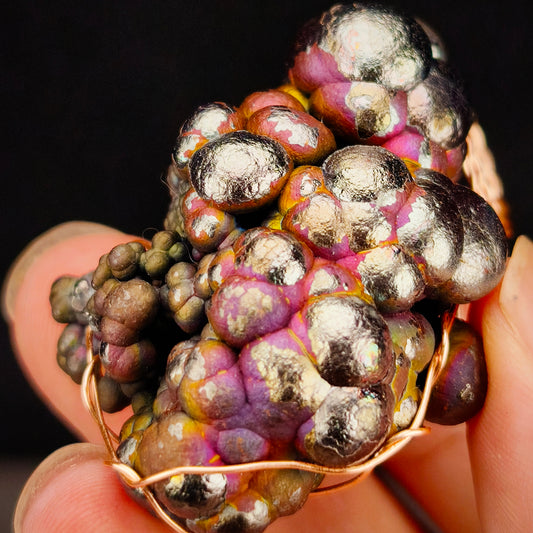
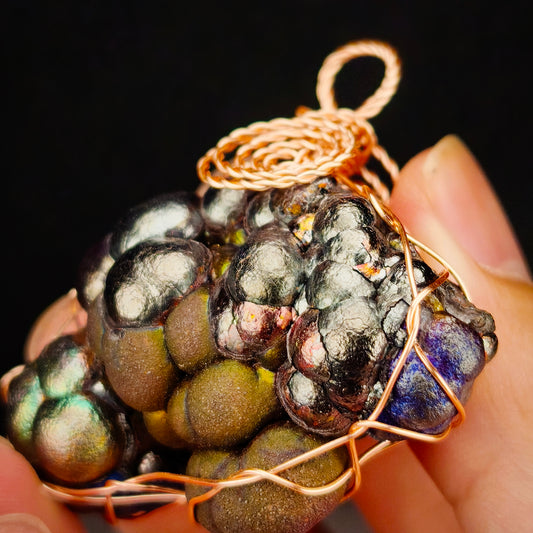
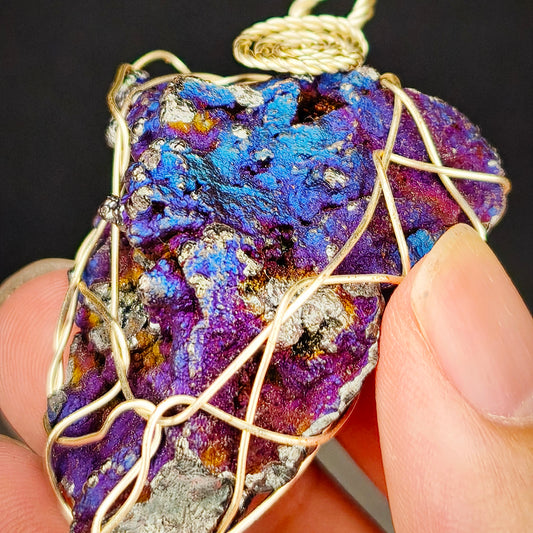
Every piece of pure natural Leklai that reaches you has passed through conditions like these on its journey from mountain to your hands.
Not every collection involves a landslide or a near-miss. But every collection involves:
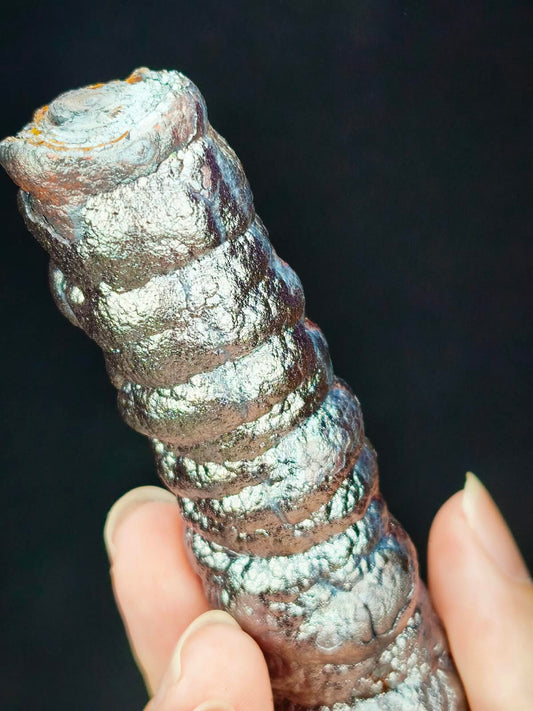
The reality of working in terrain with no guarantees. The physical demands of deep mountain access. The specific dangers of cliff-face work for varieties like Buddha Column. The unpredictable nature of post-storm conditions. The sustained personal commitment of people who choose this work because they genuinely believe in what Leklai is and what it offers.
When you hold a piece of Leklai, you are holding something that a real person worked hard and risked genuinely to bring to you.
That knowledge — if you allow it to settle in — changes how you hold it. It adds a dimension of appreciation that goes beyond the beautiful colour, beyond the energy you feel, beyond the benefits you hope for.

A Note on the Collector
The collector in this story recovered fully from his experience. He continues to work in Leklai collection.
He speaks of the experience not with resentment or fear, but with a kind of grounded gratitude — the way people sometimes speak of moments that reorganised their understanding of what matters.
He still loves Leklai. Perhaps even more deeply after that day.
FAQ
Q: Is Leklai collection safe today? A: Like all work in demanding natural environments, it carries inherent risk that cannot be completely eliminated. What has improved significantly is the awareness, preparation, and systematic safety practices of experienced teams. The risk is managed, not removed. The nature of working in mountain cave environments means genuine unpredictability remains.
Q: Does this story affect the supply of Leklai? A: Supply of high-quality natural Leklai is always constrained — by the rarity of the material itself, by the limited accessible locations, and by the nature of hand collection. Weather events and the need for safe practices add natural variation to when and how much can be collected. This is part of why genuine collector-grade Leklai is as rare as it is.
Q: Should I feel guilty owning Leklai because of the collection risk? A: The collectors who do this work choose it with awareness and genuine love for what Leklai represents. The appropriate response to understanding the difficulty is care and appreciation — treating every piece with the respect its journey deserves, not guilt that prevents connection. Appreciate what you hold. Use it well. That is the most fitting response to the story of how it reached you.
Further Reading
👉 What Is HARUKA Leklai Buddha Column? Three Treasures Second Guide
👉 What Should You Do First After Bringing Leklai Home?
👉 What Is Leklai Goethite? The Complete Beginner's Guide
👉 Seven Years of Real Leklai Stories
🔥 In every piece you hold — someone's hands, someone's effort, someone's safe return home.
Hold it accordingly.