How to Tell Real Leklai from Fake: The Complete Authentication Guide
This Matters More Than You Think
The Leklai market is growing.
More and more people are discovering it.
But alongside that growth —
Processed and counterfeit Leklai is also becoming increasingly common.
Some pieces have been heat-treated, causing the colour to become artificially uniform — and the natural energy has been significantly compromised. Some have been moulded into fixed shapes, losing all natural uniqueness. Some look beautiful, but are nothing like what you believe you're getting.
Over seven years, I have seen too many people discover this only after they brought something home.
This article exists so you know how to identify the real thing before you buy.
First: Why Can Pure Natural Leklai Never Be Polished?
Before learning to identify Leklai, you must understand one fundamental fact:
Once Leklai is polished, its entire coloured surface layer disappears — leaving only a plain brown metallic base.
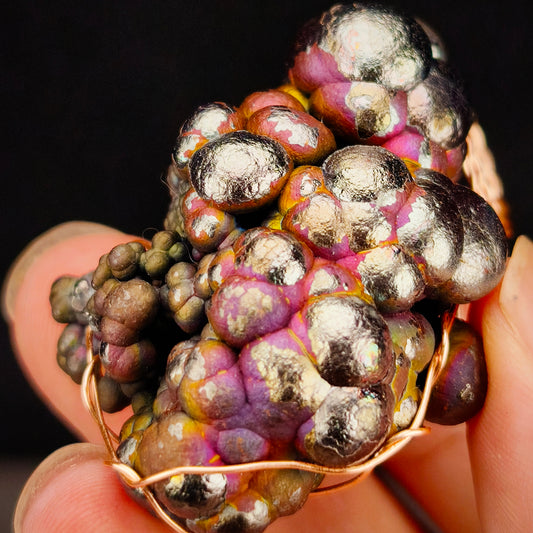
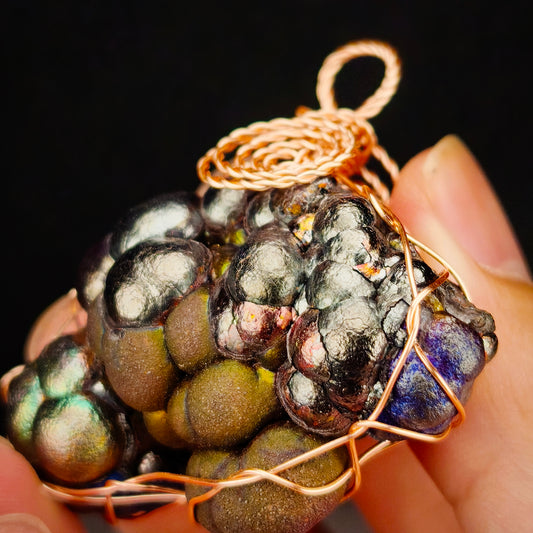
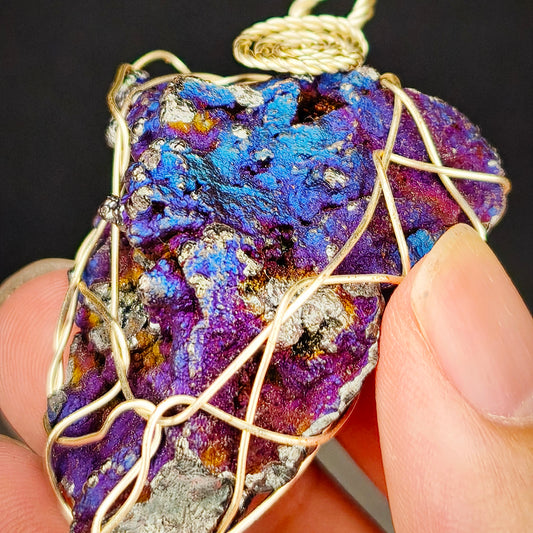
Every colour you see — gold, purple, red, blue, green, rainbow — exists only on Leklai's outermost natural surface layer.
The moment anyone polishes or buffs that surface, every colour is gone permanently.
Therefore: a genuinely pure natural piece of Leklai will always retain its original natural form.
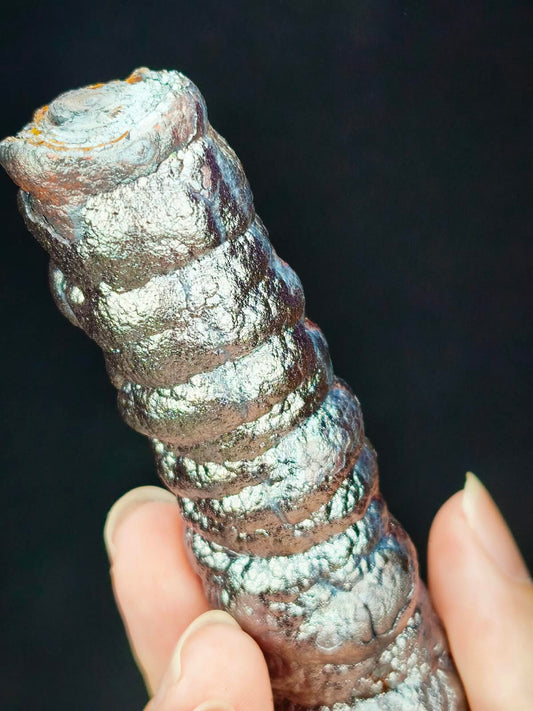
The surface texture is natural — sometimes carrying a slight smoothness, but completely different from the polished finish of a cut crystal. There will be no artificially perfect lustre. It will not be perfectly symmetrical.
This is the first and most important standard of authentication.
Five Authentication Methods
Method One: Examine the Surface Texture
Pure natural Leklai has a naturally organic surface texture.
You will see natural irregularities, natural contours, and sometimes small mineral crystals.
Sometimes the surface will carry red earth — this is natural mountain soil from where the Leklai grew. Leklai grows surrounded by red earth in the mountains; sometimes the soil becomes old and cannot be fully brushed away. This is not a defect. It is the nourishment of Leklai's growth — a natural mark of its origins.
If a piece of "Leklai" has a smooth, glossy, perfectly polished appearance — like a cut and buffed crystal — it has been processed. It is not pure natural.
Method Two: Examine How the Colour Is Distributed
Pure natural Leklai's colours form from within — emerging organically through geological processes.
The colour distribution is irregular, uneven, with variations in depth and tone, sometimes showing multiple colours layered together.
Here is an important truth you need to understand:
In pure natural Leklai, only the pieces with the best energy display the most vibrant colour. Collector-grade and premium colour pieces represent only 1-2% of everything collected from a mountain.
Most natural Leklai has relatively modest colour — this is completely normal. It does not indicate inferior quality, but it does mean the energy level is not equivalent to collector-grade or premium pieces. Collector-grade and premium Leklai carries the highest energy and most vibrant colour precisely because such pieces are extraordinarily rare.
In contrast, if colour appears too uniform, too perfect, too consistent across the entire surface — it has very likely been heat-treated.
Heat treatment causes Leklai's colour to become artificially uniform, making it appear more visually appealing — but the heat has already compromised the stone's natural energy.
Method Three: Examine the Uniqueness of Form
Every piece of pure natural Leklai has a completely unique form.
No human cutting. No mould. No standardisation — every piece's shape, size, and structure is one of a kind.
If you see pieces with very regular, symmetrical forms — or shapes that are clearly produced from a fixed mould, such as perfectly formed Buddha statues or uniform fork shapes — those are moulded and processed.
Genuine pure natural Leklai can never produce two identical pieces.
Method Four: Understand the Real Collection Process
Every piece of genuine pure natural Leklai is hand-collected by a real person entering the deep mountains — one piece at a time.
There is no such thing as Leklai that "falls from the mountain on its own."
There is no such thing as large quantities of identically formed "natural" Leklai.
Every piece was carried out of the deep mountain caves of Malaysia by human hands, one by one.
And here is something you must understand about how that collection actually happens:
Because Leklai grows surrounded and covered by natural red earth, collectors entering the mountains cannot see the complete form of each piece — they can only dig.
This means every piece of pure natural Leklai will inevitably carry a cut point — the natural section formed at the moment of collection. This is unavoidable when hand-collecting from earth that conceals the stone entirely.
The size of the cut point reflects how much of the piece was exposed during collection. The smaller the cut point, the higher the overall completeness of the piece — and high-completeness Leklai is already extraordinarily rare.
This is why collector-grade high-completeness pieces are so precious — they represent the moment when a collector, working almost blind in mountain earth, happened to preserve the most complete form possible.
Behind every high-completeness piece of Leklai is an exceptionally rare natural gift.
If a seller cannot clearly explain the collection process, or their description is vague, exaggerated, or unrealistic — that warrants careful scrutiny.
Method Five: Assess the Seller's Transparency
A genuine pure natural Leklai seller will clearly tell you:
Where it comes from — Malaysia or Thailand? How it was collected — personally hand-collected, one piece at a time? Whether any processing has occurred — heat treatment, polishing, moulding?
If a seller is vague about any of these questions, or cannot provide clear origin and collection information — that is a warning sign.
Across seven years, HARUKA has clearly stated the origin, collection method, and absolute commitment to zero polishing, zero colouring, and zero processing for every single piece.

Common Processing Methods to Know
Method One: Heat Treatment
One of the most common processing methods.
Leklai is subjected to high heat, causing its colour to become uniform and more visually consistent.
The problem: the heat directly compromises Leklai's natural energy.
How to identify: Colour appears too consistent and uniform across the surface, lacking the natural depth, variation, and irregular distribution of genuine natural colour.
Method Two: Moulding into Fixed Forms
Leklai material is pressed or moulded into fixed shapes — Buddha statues, fork shapes, or other regular forms — enabling batch production.
These pieces may look neat and consistent, but they have completely lost the natural uniqueness that defines pure natural Leklai.
How to identify: Form is too regular and symmetrical; multiple pieces share almost identical shapes.
Method Three: Polishing
Genuine Leklai that has been polished — natural colour has been permanently destroyed, leaving a smooth, plain brown metallic surface.
How to identify: Surface carries an artificially smooth, buffed texture with no natural organic character; colour is a uniform plain brown with no variation.
Normal Phenomena in Pure Natural Leklai — Don't Be Confused
Phenomenon One: Red Earth on the Surface
Completely normal. Pure natural Leklai grows surrounded by natural red mountain earth. Sometimes the soil becomes old and adheres to the surface even after cleaning. This is the nourishment of Leklai's growth — a natural mark of its mountain origins. Not a defect. Does not affect energy.
Phenomenon Two: Little or Faint Colour
Completely normal. In pure natural Leklai, only the highest-energy pieces display the most vibrant colour — and those represent only 1-2% of what a mountain yields. Most natural Leklai has modest colour. Its energy level is not equivalent to collector-grade or premium pieces, but it is equally genuine pure natural Leklai.
Phenomenon Three: Shedding or Moulting
Completely normal. Different varieties of Leklai may undergo a shedding process as their energy improves — the outer layer sheds to reveal a fresher inner mineral structure. This is a natural growth process, a positive sign that the stone's energy is elevating. It is not damage.
Phenomenon Four: A Cut Point on the Surface
Completely normal. Because every piece of Leklai is hand-collected from earth that conceals it entirely, a cut point is an unavoidable characteristic of pure natural Leklai. It is not a flaw — it is the mark of genuine hand-collection. The smaller the cut point, the higher the completeness of the piece, and the rarer it is.
Phenomenon Five: Irregular Form
Completely normal. Pure natural Leklai is never cut or shaped by human hands — every piece is naturally unique and will never be perfectly symmetrical. This irregularity is precisely the proof of its natural origin.
Why HARUKA Is Absolutely Committed to Zero Processing
HARUKA has done one thing for seven years:
Bring the most purely natural Malaysia Leklai, in its most original state, to the people it has chosen.
Zero polishing. Zero colouring. Zero processing.
Not because processing is difficult — but because:
Once a piece is processed, it is no longer truly Leklai.
Every colour you see was painted by the earth itself, inside the deep mountain caves of Malaysia, across immeasurable geological time.
Our only responsibility is to ensure it reaches you exactly as it was found.
Frequently Asked Questions
Q: Does a higher price mean it's definitely real? A: Price alone is not a reliable authentication standard. The price of pure natural Leklai reflects mineral quality, colour vibrancy, rarity, completeness, and uniqueness of form. Collector-grade vibrant pieces represent only 1-2% of mountain yield and are priced to reflect their rarity. Standard natural Leklai with modest colour carries less energy than collector-grade pieces, but is equally genuine pure natural Leklai — and more accessible in price.
Q: Is red earth on the surface of my Leklai normal? A: Completely normal. Pure natural Leklai grows surrounded by natural red mountain earth. Sometimes old soil adheres to the surface even after cleaning. This is the nourishment of Leklai's growth — a natural mark of its origins, not a defect, and it does not affect energy in any way.
Q: My Leklai doesn't have much colour. Does that mean it's lower quality? A: It means its energy level is not equivalent to collector-grade or premium pieces — but it is equally genuine pure natural Leklai. Only the highest-energy pieces display the most vibrant colour, and those represent only 1-2% of a mountain's yield. Modest colour is simply the honest natural state of most Leklai.
Q: What is the cut point on my Leklai? A: The cut point is the natural section formed when the piece was hand-collected from the mountain earth that surrounds it. Because collectors cannot see the complete form of each piece before digging, a cut point is unavoidable — and is itself a mark of genuine hand-collection. The smaller the cut point, the higher the completeness, and the rarer the piece.
Q: Is it normal for Leklai to shed or moult? A: Completely normal. Different Leklai varieties may shed their outer layer as their energy improves — this is a natural growth process, a positive development indicating the stone's energy is elevating. It is not damage.
Q: Is buying Leklai online reliable? A: Yes, with the right seller. Look for clear origin information, genuine documented owner accounts, and a verifiable multi-year track record. HARUKA has maintained seven years of real case documentation, ensuring the authenticity and quality of every piece.
Q: How can I confirm my Leklai is pure natural after purchase? A: Contact your seller to confirm origin, collection method, and processing status. HARUKA provides complete authenticity assurance for every piece we carry. The natural surface texture, irregular form, cut point, and surface characteristics of pure natural Leklai are all natural expressions of genuine authenticity.
Further Reading — Recommended
👉 What Is Leklai Goethite? The Complete Beginner's Guide
👉 Where Does Pure Natural Leklai Come From? Malaysia Deep Mountain Origin Guide
👉 Malaysia Leklai vs Thailand Leklai — What's the Real Difference?
👉 Complete Leklai Colour Guide
👉 Seven Years of Real Leklai Stories
These articles will give you a fuller picture — worth reading before you decide.
🔥 One Last Thing
When people buy Leklai, they are not just buying a stone.
They are buying an energetic connection.
A natural gift from the mountains of Malaysia.
Something the earth created across immeasurable time — unrepeatable, irreplaceable.
That deserves the most discerning eye you can bring to the choice.
Now that you know how to identify the real thing —
the piece that keeps pulling your attention is waiting.
Your Next Step
If you want to see genuinely pure natural, zero-polished, zero-dyed, zero-processed Leklai: